
THE CYCLOPS AS ARCHITECT
Updated: Jul 11
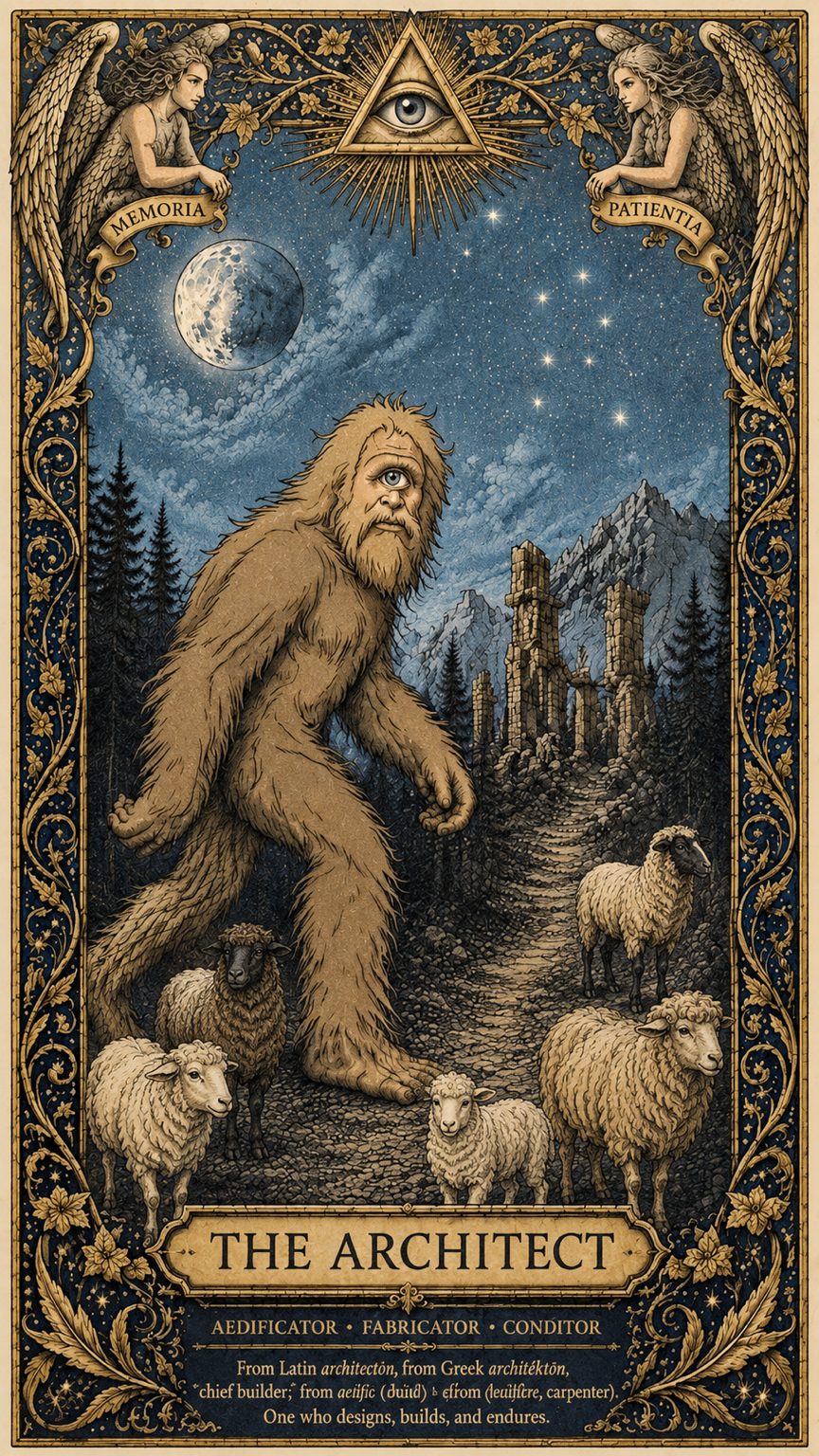
The Cyclops
Among the earliest Greek stories are three Cyclopes: Brontes (Thunder), Steropes (Lightning), and Arges (Brightness). Born of Earth and Sky, they were master craftsmen who forged the divine weapons of the gods.
They represent one of humanity’s oldest memories of extraordinary skill: the ability to shape raw nature into instruments of order.
Millenia later, the globe is dotted with colossal stone monuments whose builders have been long forgotten. Massive walls, megalithic tombs, standing stones, earthworks, and pyramids survived long after the civilizations that raised them had disappeared.
Across the world, these enduring structures continue to inspire archaeologists and archaeoastronomers, who study their remarkable alignments with the Sun, Moon, and stars, revealing that many ancient builders possessed a sophisticated understanding of the heavens.
Greek tradition tells us that when they stood before the immense walls of Mycenae and Tiryns they concluded that no ordinary people could have moved such stones. Surely, they reasoned, these must have been the work of the Cyclopes, the legendary master builders of old. Thus was born the enduring idea of Cyclopean masonry.
Homer preserves quite a different memory. His Cyclops, Polyphemus, is not a builder but a solitary shepherd living among his sheep in a cave, far from the cities of men. This quieter tradition lingers beside the older legends, suggesting the fading echo of another age.
Polyphemus belongs to an order of beings found across the world: the Wild Man. Whether called the Woodwose of medieval Europe, the Almasty of the Caucasus, the Yeti of the Himalayas, or Sasquatch in North America, these liminal figures dwell at the margins of civilization.
They are shepherds, hunters, cave dwellers, or forest guardians, not human, not beast. They inhabit the threshold between culture and wildness.
The Architect Card imagines these traditions as fragments of the same enduring story. Here the master builder becomes the last shepherd. The maker of cities outlives the cities themselves. His monuments crumble into ruins, yet he remains, walking forgotten roads beneath Orion, tending sheep where temples once stood.
Where two eyes divide attention between many things, the Cyclops beholds a single order running through heaven and earth. The patient study of the heavens became calendars. Calendars supported agriculture. Observation became measurement. Measurement became geometry. Geometry became architecture. All of this, became civilization as we know it today.
Kindred Readers: The Cyclopes
Theogony, Hesiod
The earliest surviving account of the Cyclopes. Brontes, Steropes, and Arges are born of Earth and Sky and become the divine smiths who forge Zeus' thunderbolt, Poseidon's trident, and Hades' helm of invisibility.
Library, Pseudo-Apollodorus
A concise handbook of Greek mythology that gathers together many traditions about the Cyclopes, including their imprisonment, liberation, craftsmanship, and later descendants.
Description of Greece, Pausanias
Records the ancient belief that the immense walls of Mycenae and Tiryns were built by Cyclopes, preserving the origin of the term Cyclopean masonry.
The Histories, Herodotus
While not focused on the Cyclopes themselves, Herodotus documents Egypt's monumental architecture and demonstrates how the Greeks wrestled with the antiquity of civilizations older than their own.
The Odyssey, Homer
Introduces Polyphemus, no longer a divine builder but a solitary shepherd living beyond the laws of civilization. His appearance marks a striking transformation in the Cyclops tradition.
Argonautica, Apollonius of Rhodes
Preserves later Hellenistic traditions in which the Cyclopes continue forging beneath Mount Etna, their role as divine smiths surviving long after the older myths had evolved.
The Greek Myths, Robert Graves
Connects the many, often contradictory, Cyclops traditions into a coherent symbolic narrative, while offering his own provocative interpretations.
Mythos, Stephen Fry
A modern retelling that makes the earliest Greek sources accessible while preserving the Cyclopes' role as master craftsmen.
If The Architect calls to you, these works continue the conversation between myth, archaeology, astronomy, history, and the enduring mystery of humanity's oldest monuments.
The White Goddess, Robert Graves
A poetic exploration of myth, memory, and the symbolic language hidden beneath ancient traditions.
Hamlet's Mill, Giorgio de Santillana & Hertha von Dechend
A landmark study proposing that myths preserve sophisticated astronomical knowledge from deep antiquity.
Fingerprints of the Gods, Graham Hancock
An influential and controversial exploration of lost civilizations and megalithic monuments.
Magicians of the Gods — Graham Hancock
Expands upon the idea that memories of an Ice Age catastrophe may survive in myths across the world.
The Orion Mystery, Robert Bauval & Adrian Gilbert
Introduces the Orion Correlation Theory, connecting the pyramids of Giza with the stars of Orion's Belt.
The Sirius Mystery, Robert Temple
A provocative examination of the Dogon traditions, astronomy, and the possibility of ancient scientific knowledge.
The Dawn of Everything, David Graeber & David Wengrow
A fresh archaeological perspective that challenges long-held assumptions about the origins of civilization.
The Power of Myth, Joseph Campbell
A timeless conversation on how myths continue to shape human thought and culture.
The Hero with a Thousand Faces, Joseph Campbell
The foundational work on the universal patterns underlying myths from around the world.
Cosmos, Carl Sagan
A celebration of scientific observation and humanity's enduring relationship with the heavens.


Comments